
The total cost incurred (i.e., cost of goods available for sale) must be “allocated” according to its nature at the end of the year. The cost of goods still held are assigned to inventory (an asset), and the remainder is attributed to cost of goods sold (an expense). Purchase Discounts, Returns and Allowances are contra expense accounts that carry a credit balance, which is contrary to the normal debit balance of regular expense accounts. A purchase discount reduces the purchase price of certain inventories, fixed assets supplies, or any goods or products if the buying party can settle the amount in a given time period. When a company provides a discount or an allowance to a customer it appears on a company’s income statement as a reduction to revenue.
- In a periodic inventory system, when a company takes advantage of a purchase discount, the amount of the discount is credited to the purchase discounts account.
- Freight agreements are often described by abbreviations that describe the place of delivery, when the risk of loss shifts from the seller to the buyer, and who is to be responsible for the cost of shipping.
- This means the net revenue figure is the “true” revenue for the specified period.
- For example, if there was a 2% discount on the above purchase, it would amount to $200 ($10,000 X 2%), NOT $208 ($10,400 X 2%).
- Consequently, payables are debited to reduce their balance to the amount that is expected to be paid to them, i.e. net of cash discount.
- This account is classified as a contra asset account, meaning it reduces the overall value of inventory.
- Businesses must calculate the effective annual interest rate (EIR) of offering discounts to determine financial feasibility.
More about purchase discounts and allowances
The first phase of the merchandising cycle occurs when the merchant acquires goods to be stocked for resale to customers. https://colinwilkinson.co.uk/bulk-payment-effortlessly-manage-multiple The appropriate accounting for this action requires the recording of the purchase. There are two different techniques for recording the purchase; a periodic system or a perpetual system. Generally, the periodic inventory system is easier to implement but is less robust than the “real-time” tracking available under a perpetual system. Conversely, the perpetual inventory system involves more constant data update and is a far superior business management tool. The following presentation begins with a close examination of the periodic system.
Common Mistakes in Handling Discounts
Instead of focusing on the fear and anger, she started her accounting and consulting firm. In the last 10 years, she has worked with clients all over the country and now sees her diagnosis as an opportunity that opened doors to a fulfilling life. Kristin is also the creator of Accounting In Focus, a website for students taking accounting courses. Since 2014, she has helped over one million students succeed in their accounting classes.
Best Account Payable Books of All Time – Recommended
This common payment option is contained within the invoicing code "2/10 net 30," which usually appears in the header line of an invoice. Under perpetual inventory system, the company can make the purchase discount journal entry by debiting accounts payable and crediting cash account and inventory account. Purchases, Purchase Returns and Allowances, Purchase Discounts, and Freight-in have all been illustrated. Each of these accounts is necessary to calculate the “net purchases” during a period. This would be based on the total invoice amount for all goods purchased during the period, as identified from the Purchases account in the ledger.

Large corporations negotiate dynamic discounting programs with suppliers — flexible early-payment discounts linked to the number of days paid early. This practice reduces financing costs for both parties and is gaining traction under supply-chain finance (SCF) initiatives. In the age of tight margins and global supply chains, effective discount management has become a strategic finance function. Companies that systematically analyze discount patterns — using data analytics and automation — can uncover inefficiencies in receivables and payables cycles. adjusting entries By tracking how often customers take advantage of cash discounts or how frequently the company avails supplier discounts, CFOs can identify trends that influence liquidity management.
- Red Co. repays its supplier in 8 days, availing of the purchase discount.
- From an accounting perspective, it can be seen that when the purchase is made (and the invoice is generated), the journal entry to record this transaction is Debit – Purchases, and Credit – Accounts Payable.
- If a high volume company purchases $40,000 of goods, its cost will be $28,000 ($40,000 X 70%).
- The practice of offering purchase discounts dates back to early commercial trade.
- If the season for a particular type of clothing is over (winter clothes, for example), then they are typically put on sale.
- After 30 days, your payment is now late and the seller can add on late charges or interest, depending on state law.
- Purchase Discounts is also a general ledger account used by a company purchasing inventory goods and accounting for them under the periodic inventory system.
Again, the only difference is that we do not track the changes in inventory under the periodic system. Moreover, as part of sustainable finance practices, global organizations are linking discount policies to ESG (Environmental, Social, and Governance) objectives. For example, suppliers adhering to green standards may receive preferential early-payment discounts, aligning financial incentives with sustainability goals.


Discounts allowed are reductions in the invoice price offered by a seller to customers. In the seller’s books, purchases discount discounts allowed are treated as an expense because they reduce the total income earned. Under IFRS 15 – Revenue from Contracts with Customers, cash discounts are considered variable consideration that adjusts the amount of revenue recognized. A purchase discount, often called a sales discount, trade discount, or cash discount, is an incentive that a seller offers to a buyer for paying an invoice earlier than the scheduled due date. It’s a reduction in the amount owed by the customer if they pay their invoice within a specified period of time. This is because the amount of accounts payable that the company needs to make payment to the supplier under both methods is at the same amount.
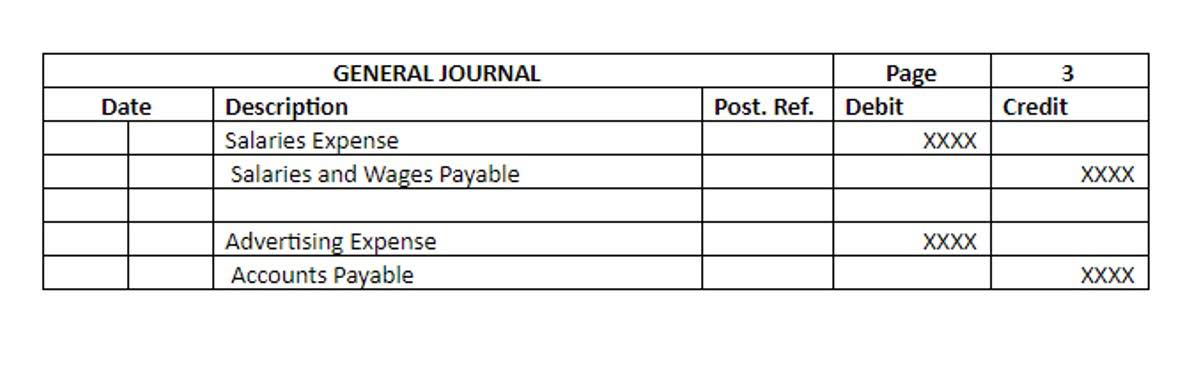
Both discounts allowed and discounts received play dual roles — one as a sales incentive and the other as a cost-saving mechanism. Their accounting impact must be precisely managed to ensure transparency and accuracy. Modern ERP systems such as SAP S/4HANA and Oracle Fusion automatically calculate discounts, post entries, and flag eligible invoices. Integration with accounts payable and receivable modules reduces manual errors and supports IFRS compliance. Including them as income or expense overstates both sales and expenses. In summary, both entries affect profitability differently — discounts allowed reduce the seller’s earnings, whereas discounts received improve the buyer’s margins.
Example of Discounts Allowed
ERS continually evaluates the overall use of the program to ensure employees and retirees find the offers helpful. The lobby in the ERS building will be closed for renovation from September until early next year. Starting Sept. 2, the ERS lobby will be relocated temporarily to 1836 San Jacinto. ERS members and visitors can conduct business with ERS customer service and meet with ERS benefits counselors in the first floor lobby of the temporary location.
- Imagine walking into a Levis store and finding that the jeans that you wanted to buy were marked down by 30%.
- As an example of a purchase discount, a seller offers its customers 2% off the invoiced price if payment is made within 10 days of the invoice date.
- When the company makes the purchase from its suppliers, it may come across the credit term that allows it to receive a discount if it makes cash payment within a certain period after the purchase.
- In this instance the accounts payable balance is cleared by the cash payment and no purchase discount is recorded.
- Under periodic inventory system, the company needs to make the purchase discount journal entry by debiting accounts payable and crediting cash account and purchase discounts.
Purchase discounts and allowances
The 'n/30' part indicates that the net amount is due within 30 days. For example, if a company purchases goods worth \$1000, they can pay \$980 (after a 2% discount) if they pay within 10 days. If they pay after 10 days but within 30 days, they must pay the full \$1000. The purpose of a business taking purchase discounts is to reduce its costs. The downside of course is that the business must make payment earlier (10 days instead of 30 days in the above example) and will lose the use of the cash for an extra 20 days. The business pays cash of 1,470 and records a purchase discount of 30 to clear the customers accounts payable account of 1,500.